Life Is Like Soccer: Keep Moving Forward

During a recent conversation, someone shared how they had made several plans, only to have life prevent them from following through.

They sounded frustrated and disappointed. They had expected to be further along, but unexpected circumstances kept getting in the way.

I explained something simple but important:

That is life.

Circumstances will arise. Schedules will change. Opportunities will disappear. People will disappoint us. Problems will show up without an invitation.

Learning how to keep moving forward when plans change is one of the most important skills we can develop.

Our responsibility is not to control every circumstance. Our responsibility is to adjust without abandoning the goal.

Later, I started thinking about a real-life example that could encourage people not to take unexpected or unwanted interruptions personally.

We often interpret a delay as rejection, a change of direction as failure, or a difficult season as proof that we are falling behind.

Then it came to me.

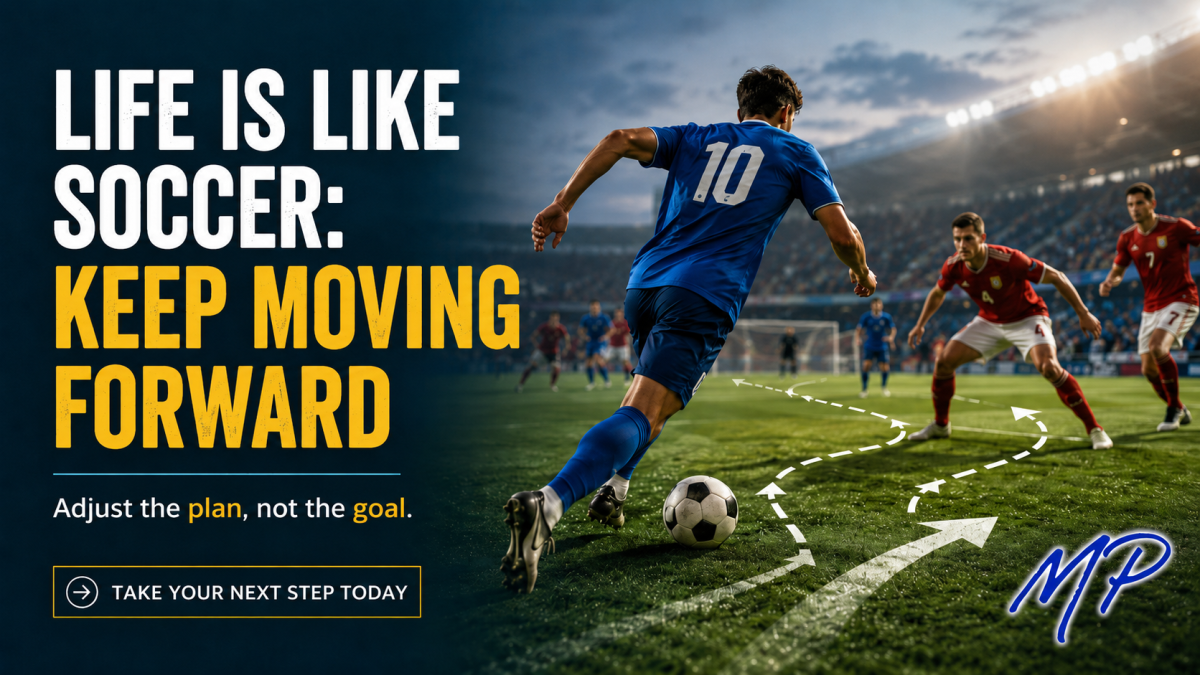
Life is a lot like soccer.

The Ball Does Not Move in a Straight Line

Millions of people watch soccer because it is fast, emotional, unpredictable, and exciting.

But when you pay close attention to the game, you notice something important.

The ball rarely travels directly from one goal to the other.

Players pass it forward, sideways, and backward. An offensive player may move toward the goal, only to have a defender block the path. The ball may be intercepted and sent in the opposite direction.

Sometimes a team passes the ball all the way back to its goalkeeper.

To someone who does not understand the game, that backward pass might look like a mistake. It might appear that the team is giving up its progress.

But experienced players understand what is happening.

They are resetting.

They are creating space, changing the angle, and looking for another opportunity to move forward.

They have not forgotten the goal. They are simply finding a different path toward it.

That is an important lesson for life.

A change in direction does not always mean you are losing. Sometimes it means you are creating the space needed for a better move.

A Setback Is Not Always a Defeat

During a soccer match, possession can change dozens of times. A player may lose the ball, recover it, lose it again, and still help the team score.

The player may not enjoy losing possession, but they do not stop playing because of it.

They understand that resistance is part of the game.

Life works the same way.

You may have a plan to complete an important task, but an emergency changes your schedule.

You may prepare for a job opportunity and not get selected.

You may invest time in a relationship that does not work out.

You may start making progress and suddenly face a financial, professional, or personal setback.

Those experiences can hurt. They can be frustrating and disappointing.

But they do not automatically mean you have failed.

Sometimes you need to pass the ball backward so you can create a better opportunity to move forward.

Stop Taking Every Interruption Personally

One of the most dangerous things we can do is assign a negative meaning to every inconvenience.

A delayed plan does not mean life is against you.

A closed door does not mean there are no other doors.

A rejection does not mean you have no value.

A mistake does not mean you are incapable.

An interruption may simply require a new strategy.

When we take every setback personally, we waste energy asking:

โ€œWhy is this happening to me?โ€

A stronger question is:

โ€œWhat is my next move?โ€

That question shifts your focus from frustration to action.

It reminds you that even when you cannot control the entire game, you can still control your next pass.

You can adjust.

You can regroup.

You can learn.

You can move again.

How to Keep Moving Forward When Plans Change

There will be days when your original plan is no longer possible.

That does not mean the goal must disappear.

It means the plan may need to change.

If you cannot change your tires today, schedule it for tomorrow.

If you did not get the job, improve your rรฉsumรฉ, strengthen your interview skills, and apply for another one.

If your business idea does not work as expected, study the feedback and adjust the offer.

If you fall, learn what caused the fall and get back up.

If someone you like does not feel the same way, respect the answer and remain open to meeting someone who values you.

The path may change.

The timing may change.

The people involved may change.

The goal can remain.

This is where emotional strength becomes practical.

Resilience is not pretending that disappointment does not hurt. It is refusing to let disappointment make your decisions for you.

You can acknowledge the setback and still choose your next move.

Adjust the Plan, Not the Goal

A goal gives you direction.

A plan gives you a path.

Those two things are not the same.

Many people give up on the goal because the original plan stopped working. They confuse the method with the mission.

But there may be several ways to reach the same destination.

A soccer player does not stop trying to score because one lane closes. The player changes direction, passes the ball, looks for space, and tries again.

You can do the same.

When something is not working, ask yourself:

What can I change?

What have I learned?

What resources do I need?

Who can help me?

What is the next responsible action?

These questions keep you focused on movement instead of frustration.

Progress Is Often Messy

We sometimes imagine progress as a perfectly straight line.

Set the goal.

Follow the plan.

Reach the destination.

Real progress rarely looks like that.

It includes detours, pauses, missed opportunities, difficult conversations, failed attempts, and unexpected responsibilities.

There will be moments when you feel as if you are moving backward.

But moving backward strategically is different from giving up.

A soccer team may retreat temporarily to regain control of the field.

In the same way, you may need to slow down, reorganize your finances, rebuild your confidence, learn a new skill, or recover physically and emotionally.

That season is not wasted if it prepares you for your next move.

What looks like a delay may be development.

What feels like a setback may be redirection.

What appears to be lost progress may be the space you need to create a better opportunity.

Keep Your Eyes on the Goal

Progress is built by consistently putting one foot in front of the other.

You do not need to solve your entire life today.

You only need to identify the next responsible action.

Make the call.

Submit the application.

Have the conversation.

Take the class.

Rewrite the plan.

Ask for help.

Try again.

The people who reach meaningful goals are not always the people who encounter the fewest obstacles.

They are often the people who become skilled at adjusting without quitting.

Life will interrupt you.

Defenders will block you.

The ball will occasionally move in the wrong direction.

That is not a reason to leave the field.

That is the game.

Choose Your Next Move

Think about one goal that life has delayed, disrupted, or forced you to reconsider.

Do not ask whether the original plan still works.

Ask yourself:

What is one move I can make today that puts me back in the game?

Write it down.

Schedule it.

Complete it today.

Your path does not have to be perfect.

Your progress does not have to be fast.

You simply have to keep moving, adjusting, and looking for the next opportunity.

The goal is still there.

Life may change your route, but it does not have to change your destination.

Take Your Next Step Today
Men, Open the Damn Door: Why Chivalry Still Matters

As a father of two young ladies, I always worked hard to raise them to be independent women who believed they could do anything they set their minds to.

I exposed them to summer classes in architecture, AutoCAD, engineering, and robotics. I encouraged them to participate in sports like Jiu-Jitsu, karate, and Taekwondo. For me, it was never about forcing them into one path. It was about giving them options, empowering them not to fear life, and opening their eyes to the possibilities in front of them.

At the same time, I never wanted them to feel like strength meant losing their femininity.

At first, I had my doubts. They were very basic. No makeup, no frills, and definitely not the typical teenage social scene. But later, they grew into makeup, dressing more ladylike, and yes, liking boys.

I wanted my daughters to know they could do it all. They did not need a man to complete them. But I also never wanted them to believe that independence meant rejecting the possibility of sharing life with a good man, if he was the right one.

When I was young, I remember going out with my parents. Wherever we went, my father would tell me to run ahead and get to the door before my mother and sisters so I could open it for them. That lesson became engraved in the deepest parts of my soul. I still do it to this day. Maybe not 100% of the time, but probably 95%. To me, it is as natural as breathing.

And yes, I know a woman is fully capable of opening the door herself. She can do that just fine when Iโ€™m not there. But when I am there, Iโ€™m opening it.

This past week, I was with a young lady for work, and I opened the door for her almost every time. She told me it was not necessary because we were at work.

I looked at her and jokingly said, โ€œYouโ€™re not special.โ€

What I meant was this: every woman who enters my vehicle gets the door opened for her. It is not about romance. It is not about weakness. It is not about needing help. It is about respect, service, consideration, and the way I was raised.

So I ask the question: Is chivalry dead?

Is the expectation that a man should be chivalrous dead?

Why does opening a door feel like such a grand gesture today?

But there is a bigger picture here.

We have to stop making acts of service, kindness, consideration, and thoughtfulness seem rare or extraordinary. These things should not feel special. They should feel normal.

Men, open the damn door.

Ladies, if he cannot open the door, how well is he really going to treat you?

Because this is not really about the door.

It is about choosing who gets to sit beside you in life.

Who makes your life better?

Who honors you?

Who serves you?

Who chooses you with his actions, not just his words?

To my daughters, and to every woman reading this: choose yourself. And when you choose someone to walk beside you, choose someone who also chooses to serve, protect, honor, and uplift you.

Mรกs Que Dinero

โ€œMรกs Que Dineroโ€ captures the heart of the NAHREP 10 Disciplines and what they mean to our community. To me, this song is about redefining wealth beyond appearances while never forgetting the importance of generating real wealth, protecting it, and transferring it to our families. It speaks to the discipline required to live below our means, minimize debt, invest wisely, know our net worth, stay healthy, give generously, use our voice, and keep family at the center. My hope is that this song inspires our community to build with purpose today so we can leave a legacy of freedom, stability, and opportunity for the next generation.

Lyrics

[Intro]
ยกOye familia!
Esto no es solo dinero
Esto es legado
Esto es disciplina
Esto es vida

[Verse 1]
They told us wealth was a car and a chain
But shiny things fade when theyโ€™re bought with pain
Real wealth moves quiet, strong and deep
Itโ€™s the freedom you build while others sleep

Be top ten, donโ€™t settle for less
Master your craft, let your work confess
Live below your means, stay ready for storms
When the market gets cold, your vision stays warm

[Pre-Chorus]
No more chasing what only looks rich
Weโ€™re building roots, not a temporary fix
From abuelaโ€™s prayers to the dreams of our kids
We rise with purpose in everything we did

[Chorus]
Mรกs que dinero, mรกs que ganar
Itโ€™s how we live, itโ€™s who we are
Familia, salud, legado y fe
We build today for a stronger way

Mรกs que dinero, feel that fire
We lift each other higher and higher
With discipline, heart, and vision too
The NAHREP 10 is how we move

[Verse 2]
Minimize debt, break every chain
Donโ€™t let interest steal your name
Invest twenty percent, let it multiply
Real estate and stocks, reach for the sky

Know your net worth, write it down
You canโ€™t change numbers you never found
Be politically savvy, use your voice
When we show up, we change the choice

[Pre-Chorus]
No more sitting outside the room
We bring light where they expected gloom
From the block to the boardroom, watch us grow
With every smart move, our children know

[Chorus]
Mรกs que dinero, mรกs que ganar
Itโ€™s how we live, itโ€™s who we are
Familia, salud, legado y fe
We build today for a stronger way

Mรกs que dinero, feel that fire
We lift each other higher and higher
With discipline, heart, and vision too
The NAHREP 10 is how we move

[Bridge]
Move your body, protect your health
Because what is money without yourself?
Give with love to those in need
A generous heart is a powerful seed

And donโ€™t forget the ones at home
The dinner table is your throne
Your greatest wealth, your greatest win
Is the love you build with your children

[Breakdown, Spoken with rhythm]
Mark Pinilla said, listen close
As a NAHREP 10 Certified Trainer
Heโ€™s teaching families how to better their lives
Better their habits
Better their money
Better their future
Because this is not just success
This is significance

[Montuno Section]
Mรกs que dinero
Mรกs que dinero
Familia primero
Legado sincero

Mรกs que dinero
Mรกs que dinero
Wealth with a purpose
Heart full of fuego

[Verse 3]
Have a mature mind, donโ€™t live for show
Top ten energy, let excellence grow
Live below your means, keep your spirit free
Minimize debt, own your destiny

Invest for the future, know what youโ€™re worth
Use your voice and protect your earth
Health in your body, giving in your soul
Family at the center, thatโ€™s the ultimate goal

[Final Chorus]
Mรกs que dinero, mรกs que ganar
Itโ€™s how we live, itโ€™s who we are
Familia, salud, legado y fe
We build today for a stronger way

Mรกs que dinero, feel that fire
We lift each other higher and higher
With discipline, heart, and vision too
The NAHREP 10 is how we move

[Outro]
Mรกs que dinero
Mรกs que dinero
Not just income
A legacy weโ€™re building

Mรกs que dinero
Mรกs que dinero
For our families
For our future
For our people

ยกAzรบcar!

Being Ready Is Not a Feeling, It Is a Decision

Being ready is not a feeling. That is a lesson many of us learn the hard way. We tell ourselves we need to know more, feel more, see more, and experience more before we move. We think that once we have a little more information, a little more confidence, or a little more certainty, then we will finally be ready.

But somehow, it never feels like enough.

There is an internal battle in our heads that convinces us we cannot be successful until we feel ready. That is the trap. For many of us, readiness never shows up as a feeling. It shows up after a decision.

Why Being Ready Is Not a Feeling

Have you ever heard someone say, โ€œYouโ€™re luckyโ€?

I understand what they mean. Sometimes the world defines luck as being in the right place at the right time. In my mind, that is lottery-ticket luck. It happens, but it is rare.

However, there is another kind of luck. It is the kind that shows up when preparation meets opportunity.

Is a race car driver lucky because he won? Or was he in the right place, at the right time, with the right training, the right repetition, and the right decision-making under pressure?

Put me in that race and I would be the slowest driver on the track.

Does a firefighter ever truly feel ready to run into a burning building, or do they make the decision to go in anyway? In my mind, most of us have it easy compared to that.

That is not luck. That is preparation.

What the STAR Personality Test Taught Me

About 25 years ago, I took a personality test called STAR, and it was one of the most impactful trainings I have ever taken. It helped me understand who I was, but just as importantly, it helped me understand who I could become.

STAR stands for:

S = Stability
T = Theory
A = Action
R = Relationship

I will not be able to do the full training justice here, but I hope I can at least help you understand these personality types.

An S is someone who likes order. They are organized and need things in place to feel like they can function. While that can be a strength, it can also slow them down. Sometimes the need for order keeps them from doing the very activities that would actually make them successful.

A T is what some might call the techy one, the analytical one, and the nerd all in one. They like to know why the world turns. They want information, stats, and numbers before making decisions. But the need to have all the information can also become their Achillesโ€™ heel. This person often will not move forward until they feel they have all the information or all the training to make the right choice.

An A is a person who just does it. They do not always know how to do it, and yet they still try. Over and over until they get it. It does not matter how many mistakes they make, how much money they lose, or how uncomfortable it gets, they go after what they want.

An R is focused on relationships and how others feel, sometimes even in spite of their own feelings. They are cause-focused individuals. They care deeply. They are so giving that others may sometimes take advantage of them. Truly, they are the kind of person who would give you the shirt off their back.

While we all have varying degrees of each one, some are stronger than others. I also believe it is important that we work on strengthening the good aspects of each one.

My Strongest Traits Were T and R

At around 25 years old, my strongest traits were T and R. Funny enough, I know I still am. The difference now is that I have made it a point to strengthen the weaker traits too, especially the ability to act before I feel completely ready. Honestly, that growth has made a real difference in my life.

I say that because I am successful. I do very well, but I also know I could do so much more.

The most interesting part is that the A personality type often has an advantage when it comes to success, because action creates momentum.

Why?

Because of the ability to act without overthinking. To try things without knowing everything. To move forward without carrying so much concern about what others think.

That, to me, is one of the secret ingredients.

The A personality does not wait to feel ready. They make the decision to do it.

Being Ready Is Not a Feeling, It Is a Decision

So why is it so hard?

Because we are looking for the feeling to be right, when in reality, it does not matter nearly as much as we think it does. We are waiting for confidence, certainty, and comfort to show up first.

But most of the time, movement has to come first.

For me, one of the biggest struggles has been feeling like I am being pushy or getting into someone elseโ€™s business. Then I ask myself a harder question.

What if what I have is so important that it could truly change their life?

What if the difference I can make in their life could be exponential?

What if I stay quiet, and later I see that family member, friend, or potential client suffer, when I had an answer, a solution, or a path that could have helped them, and I never shared it?

How would I feel then?

That question changes everything.

Because sometimes what looks like being pushy is actually caring enough to speak up.

Sometimes what looks uncomfortable is actually necessary.

Sometimes what looks bold is exactly what love, service, and leadership require.

That is why this message matters so much to me:

Being ready is not a feeling. It is a decision.

You do not need to feel every emotion lining up perfectly before you begin. You do not need every answer before you take the first step. You do not need permission to move forward on the thing that has been sitting in your heart.

You need a decision.

Stop Waiting to Feel Ready and Start Moving

So what is todayโ€™s moral of the story? What do I want you to take home?

Stop waiting to feel ready, and start moving.

Make the call. Start the conversation. Share the value. Offer the help. Do the thing that has been pulling at your spirit.

If they are your friend or family, they will listen.

If they are not, show them value. Show them that you care.

Not too long ago, I wrote a legacy statement. This is my compass and my mission:

โ€œMy legacy will be that I served others so they could live a better quality of life and become better versions of themselves, financially, educationally, spiritually, and in their family lives. I hope to inspire them to serve in the same way.โ€

That is what I want my life to stand for.

So if you are in a rut, it is okay.

Find that person who is going to inspire you to do great things. Look for the person who is going to challenge you. Chase that dream and make it a reality.

Do not wait for the feeling.

Make the decision.

Because the people who change their lives are rarely the ones who felt the most ready.

They are the ones who decided to go anyway.

Make the Decision

At some point, we all have to stop waiting for the feeling and start making the decision.

So if you are ready to grow, to lead, to serve, and to build a better life for yourself and the people around you, connect with Mark Pinilla.

Because a better future does not begin when you feel ready. It begins when you decide.

Visit MarkPinilla.com to begin building your legacy:
๐Ÿ‘‰ https://www.markpinilla.com

Follow Mark on Instagram for leadership insights and encouragement:
๐Ÿ‘‰ https://www.instagram.com/markthespeaker

Connect professionally on LinkedIn:
๐Ÿ‘‰ https://www.linkedin.com/in/markpinilla/

See what others are saying about Mark:
๐Ÿ‘‰ https://share.google/M8EO56f4ZJTNVieuh

Follow Mark on Bluesky:
๐Ÿ‘‰ https://bsky.app/profile/markpinilla.bsky.social

Quote & title inspired by Chicago Fire: โ€œBeing ready is not a feeling. It is a decision.โ€

Lead With Gratitude and Build Lasting Legacy

To lead with gratitude is not simply a mindset. It is a responsibility.

When you pause and reflect on your life, you realize something powerful. You did not build your success alone. Someone believed in you. Someone forgave you. Someone invested time, patience, and wisdom into you when you needed it most.

Because of that, you now carry a responsibility.

Gratitude is not passive. Gratitude demands action.

If someone loved you into who you are becoming, then you now have the opportunity to multiply that same love and leadership into the lives of others. When you lead with gratitude, you create influence that lasts. That is how you build lasting legacy.


Why You Must Lead With Gratitude

Leadership is not about position.
Leadership is about example.

When you choose to lead with gratitude, you:

  • Model character
  • Demonstrate emotional strength
  • Inspire resilience
  • Encourage growth in others

People are watching how you respond to pressure. They are watching how you treat others. They are watching how you handle challenges.

You may not realize it, but your life is always teaching.

The question is simple: What lesson are you modeling?

If you want to build lasting legacy, you must first lead with gratitude consistently and intentionally.


Keep Adding. Never Stop Growing.

I am often reminded of 2 Peter 1:5โ€“8 (NIV), which you can read in full at BibleGateway:

It says:

โ€œFor this very reason, make every effort to add to your faith goodness; and to goodness, knowledge; and to knowledge, self-control; and to self-control, perseverance; and to perseverance, godliness; and to godliness, mutual affection; and to mutual affection, love. For if you possess these qualities in increasing measure, they will keep you from being ineffective and unproductive in your knowledge of our Lord Jesus Christ.โ€

What stands out is simple.

It never says stop.

It does not say add until life becomes difficult.
It does not say add until culture becomes unstable.
It does not say add until you feel discouraged.

It says add.

Keep growing.
Keep strengthening your character.
Keep increasing your capacity to love.

When you lead with gratitude, you continue adding to your life regardless of what the world subtracts.


Be Pillars in a Shifting World

We cannot allow ourselves to be discouraged by the world and its challenges.

The world does not need more critics. It needs pillars.

Pillars in our homes.
Pillars in our businesses.
Pillars in our communities.

When you lead with gratitude and live intentionally, you become steady in uncertain times. Your consistency becomes strength for others. Your character becomes stability for those you influence.

That is how you build lasting legacy.


Ready to Build Your Legacy?

Gratitude is not theory. Leadership is not accidental. Legacy is not automatic.

It is built.

If this message speaks to you and you are ready to grow intentionally, I invite you to connect with Mark Pinilla.

Visit MarkPinilla.com to begin building your legacy:
๐Ÿ‘‰ https://www.markpinilla.com

Follow Mark on Instagram for leadership insights and encouragement:
๐Ÿ‘‰ https://www.instagram.com/markthespeaker

Connect professionally on LinkedIn:
๐Ÿ‘‰ https://www.linkedin.com/in/markpinilla/

See what others are saying about Mark:
๐Ÿ‘‰ https://share.google/M8EO56f4ZJTNVieuh

The world does not need more critics.
It needs pillars.

Be steady.
Be grateful.
Be love in action.

Progress Over Perfection: Why Done Is Better Than Perfect

Letโ€™s be honest โ€” perfection is exhausting. But when you choose progress over perfection, everything changes. You move faster, smarter, and with more peace.

The pressure to be flawless shows up in our work, our homes, and our goals. But striving for perfection can hold us back.

Youโ€™ve likely felt it: the need to do everything just right.
To get 100%, not 91%.
To redo something over and over, even when itโ€™s already good enough.

But here’s the truth:
Progress over perfection isnโ€™t settling.
Itโ€™s strategy.

Progress Over Perfection vs. the Pressure to Be Perfect

I once watched a child chase straight Aโ€™s with tunnel vision.

She studied constantly, driven by the belief that anything less than 100% wasnโ€™t good enough.
She was brilliant โ€” but exhausted.

Eventually, after honest conversations, she realized something powerful:
An A is still an A, whether itโ€™s a 91% or a perfect score.

That shift freed her. She began focusing on classes where she could truly grow.
She stopped wasting time on chasing what wouldnโ€™t move the needle.

Thatโ€™s not quitting. Thatโ€™s intelligence.

Itโ€™s what choosing progress over perfection looks like in real life.

Why Progress Over Perfection Wins Every Time

Perfection is paralyzing. Progress is powerful.

Hereโ€™s what happens when you let go of being flawless:

  • You move faster.
  • You make better decisions.
  • You stop overthinking and start executing.

When you choose progress over perfection:

You trade pressure for clarity.
Control for confidence.
Shame for momentum.

Are You Focused on the Right Things?

Take a pause and ask yourself:

  • What are you obsessing over thatโ€™s already โ€œgood enoughโ€?
  • What goals have you stalled on because theyโ€™re not perfect?
  • Where can 80% effort give you 100% of the results?

If youโ€™re honest, youโ€™ll see it: some things arenโ€™t worth perfecting.
Theyโ€™re just worth finishing.

Progress Over Perfection in Action

Hereโ€™s a quick audit to get back in alignment:

  • โœ… Whatโ€™s one task youโ€™ve been over-perfecting? Let it go.
  • โœ… Whatโ€™s one decision youโ€™ve delayed? Make it today.
  • โœ… Whatโ€™s one thing you can improve, not perfect? Do that instead.

Momentum beats mastery โ€” especially in the beginning.

Redefining Success

Inspired by Mรกs Que Dinero, success isnโ€™t about being flawless.
Itโ€™s about being aligned. About knowing what really matters โ€” and doing that well.

You donโ€™t need to do it all. You need to do what matters.

Thatโ€™s the shift we all need:
To stop chasing applause and start choosing what truly matters.


Next Steps: How to Embrace Progress Over Perfection

If you’re done letting perfection slow you down, hereโ€™s your next step.

๐ŸŽฏ Prioritize the progress that matters.

๐ŸŽค Talk to someone about the pressure youโ€™ve been under.
Start with a coach, mentor, or even me.

๐Ÿ’ฌ Reach out here
๐Ÿ“ Google Business Profile
๐Ÿ“ฑ Instagram
๐Ÿ’ผ LinkedIn

Know someone stuck chasing perfect?
Share this with them. Remind them:

Done is better than perfect.
Progress is power.

How to Start Investing: Earn Up to 100% Employer Match

We hear it everywhere:
โ€œYou should start investing.โ€ If you’re looking for a beginner investing strategy, this post walks you through each step.

But for most people, thatโ€™s like being told to bake a pineapple upside-down cake. Itโ€™s not impossible. It just feels overwhelming without a clear recipe.

If youโ€™re a young adult, married, raising kids, or simply trying to manage your money better, this guide is for you.


Step One: Build a Safety Net First

Before you invest, protect yourself and your family.

Life Insurance
If something happens to you, life insurance replaces your income and protects the people who depend on you.

Emergency Fund
Save 3 to 6 months of essential expenses. This gives you breathing room when life throws curveballs like job loss, medical bills, or car repairs.

Once these are in place, youโ€™re ready to move forward.


Step Two: Take the Free Money First

If your employer offers a 401(k) match, always take it.
This is guaranteed money.

Employer MatchImmediate Return
100% match (dollar for dollar)100% return
$0.50 cents per dollar50% return
$0.25 cents per dollar25% return

Even at 25%, thatโ€™s more than double what financial planners expect from the market in a single year.

What Financial Planners Use for Forecasting

Planners use historical averages to estimate long-term growth. These are not guarantees, just benchmarks:

Time HorizonEstimated Annual Return
20+ years8 to 10%
10โ€“20 years6 to 9%
0โ€“10 years3 to 7% (more volatile)

This is why the employer match is so powerful. It gives you a return before your money even enters the market.


Step Three: Open an IRA

If youโ€™ve maxed out your 401K match, or if your job doesnโ€™t offer a plan, your next step is an IRA.

Traditional IRA

  • Uses pre-tax money
  • May reduce your taxable income
  • Taxes are paid later in retirement

Good if you need tax relief now.

Roth IRA

  • Uses after-tax money
  • Grows tax-free
  • Withdrawals in retirement are not taxed

Good if you expect higher taxes later or want tax-free income.

You can have both, but the total contribution across Traditional and Roth IRAs is capped each year.


Step Four: Consider Annuities (Optional)

If you’ve already maxed out your 401(k) and IRA, some people use annuities to invest more and defer taxes.

Annuities can offer:

  • Tax-deferred growth
  • Predictable income in retirement
  • Lifetime payout options

However, they arenโ€™t for everyone. Always talk with a licensed advisor before adding them to your plan.


Step Five: Know Your FIN and Your Net Worth

Your FIN (Financial Independence Number) is the amount of money you need to retire comfortably without needing to work again.

This number gives you direction:

  • How much youโ€™ll need
  • When you could reach it
  • How much you should invest each month

But hereโ€™s the key:
You canโ€™t improve what you donโ€™t measure.

Thatโ€™s why NAHREP 10 Discipline #6 says:
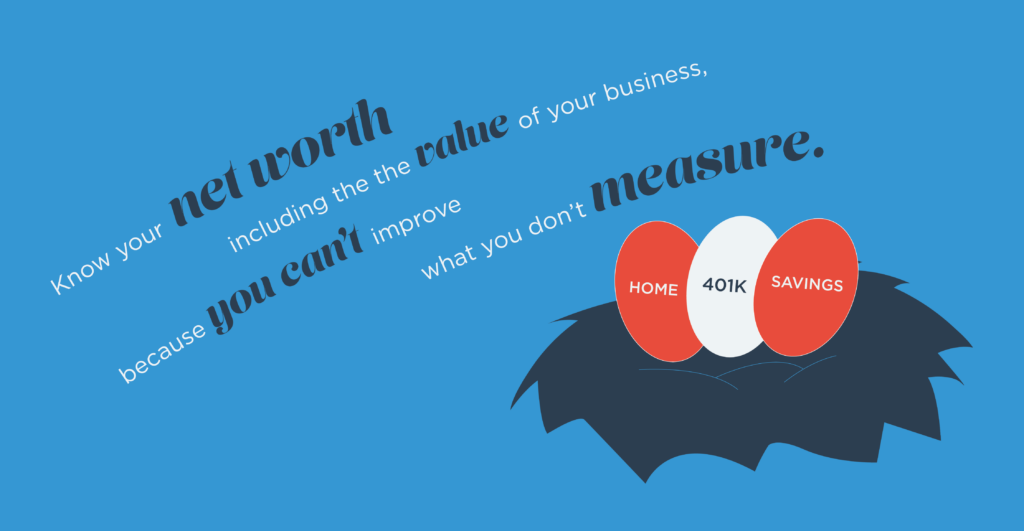
Know your net worth, including the value of your business.

This should be reviewed every year.

Your net worth is your scoreboard. Your FIN is your goal line. Reviewing both keeps your financial strategy focused, accurate, and relevant to your goals.

NAHREP 10 Discipline 6

Ready to Build Your Strategy?

If you’re ready to stop guessing and start building a real plan, I can help.

๐Ÿ“ฉ Schedule your strategy session:
๐Ÿ”— www.markpinilla.com/contact

๐Ÿ“ฑ Follow for tips and updates:
๐ŸŒ Google Business
๐Ÿ“ธ Instagram @markpinilla
๐Ÿ’ผ LinkedIn

You donโ€™t need to be an expert.
You just need a clear plan and the right guide.

๐Ÿ‘‰ Letโ€™s connect now and take the first step toward your Financial Independence Number.

You Have a Will โ€” Whether You Wrote It or the State Did

๐Ÿ›‘ Estate Planning for Hispanic Families

Only 25% of Hispanic homeowners over age 50 have a will or trust โ€” the lowest rate of any demographic in the U.S.

This isnโ€™t just a stat.
Itโ€™s a red flag for unprotected generational wealth.

Because when you donโ€™t have an estate plan, the state decides:
๐Ÿ  Who gets your home
๐Ÿ‘จโ€๐Ÿ‘ฉโ€๐Ÿ‘ง Who raises your children
๐Ÿ’ฐ How your assets are divided
โณ How long your family waits
๐Ÿ’” And how much it costs them in probate

If you donโ€™t have a will, the state has one for you.
But it wonโ€™t reflect your values, protect your legacy, or preserve peace in your family.

And while estate planning is often misunderstood as a โ€œluxury,โ€ itโ€™s actually the foundation of wealth preservation. Especially if youโ€™re a homeowner, a parent, or a business owner.

Hereโ€™s what you need to protect your assets:

โœ… A Living Will โ€“ outlines your healthcare decisions
โœ… A Revocable Trust โ€“ avoids probate, keeps your affairs private
โœ… A Durable Power of Attorney โ€“ gives a trusted person legal authority if needed
โœ… A valid Will โ€“ ensures your wishes are clear and enforceable

๐ŸŽฅ Watch this quick video to see how easy it is to begin:


๐Ÿ“ฉ Ready to protect what matters most?

Contact Mark Pinilla to learn how you can start protecting your assets today.

Iโ€™ll show you how to start the process.

๐Ÿ’ฌ Because estate planning isnโ€™t optional. Itโ€™s essential for any family building a legacy.

๐Ÿ‘‰ To read the full report, click the link below:
https://bit.ly/3IxQNKD

Manifestation Rewires Your Brain for Success

Manifestation rewires your brain for success, whether you realize it or not. The stories you repeat in your mind shape your beliefs, your decisions, and ultimately the direction of your life.

Inspiration comes in many forms.

Today, mine came from my daughter, through a tattoo.

Iโ€™ve never been one for tattoos. I can appreciate the art, but itโ€™s simply not something I would ever do myself. This isnโ€™t about right or wrong. Itโ€™s about meaning.

Her new ink reads: โ€œWe Chase Misprinted Lies.โ€

When I asked her what it meant, she said, โ€œWe make up stories in our heads about how things are, and those stories keep us from being true to ourselves.โ€

That stopped me.

The phrase, taken from the Alice in Chains song Nutshell, is commonly interpreted as a reflection of our tendency to chase false beliefs and distorted truths.

And that is exactly where manifestation begins.

Your Mind Is the First Battlefield

Manifestation does not begin in the physical world. It begins in the mind.

Neuroscience shows that the brain responds to repetition, imagery, and emotional association. These inputs form patterns. Patterns become habits. Habits become outcomes.

Change the pattern, and the outcome follows.

As Em on the Brain puts it:
โ€œReality does not exist in the physical worldโ€”it exists in your mind. So when you’re manifesting, what you’re doing is trying to change your mental reality. AKA rewire your brain, so in order to manifest the things you want…โ€

This isn’t magic. Itโ€™s neuroplasticity. Youโ€™re not bending realityโ€”youโ€™re bending your beliefs, your focus, and your behaviors into alignment with what you want.

How Manifestation Rewires Your Brain for Success

Manifestation is not wishful thinking. It is structured mental conditioning.

Here are three practical routines that help rewire the brain for success.

1. Visualization Habits That Program the Mind for Action

Visualization has been shown to improve performance by more than 20 percent. People who vividly picture their goals are significantly more likely to achieve them.

The key is to visualize the process, not just the result.

See yourself walking across the graduation stage.
Defending your first case.
Signing the contract.
Driving the car.
Stepping into the role.

Your brain prepares for action through repetition, whether imagined or real.

You are not meant to be a bystander in your own story.
You are meant to be the writer, the producer, and the director of your lifeโ€™s movie.

2. Scripting Your Future Into Present Reality

Writing shapes belief.

When you write your goals as if they already exist, you align identity with intention.

Common methods include:

  • Writing the same goal 55 times for 5 days
  • Writing goals three times in the morning, six in the afternoon, and nine at night
  • Gratitude journaling written in the present tense

Clarity plus repetition builds belief.

3. Rewiring the Brain Through Your Environment

Your environment is constantly programming your mind.

What you listen to, who you surround yourself with, and what you consume repeatedly shape your internal dialogue.

Choose inputs that support growth.
Reduce exposure to negativity.
Spend time with people who challenge you to be better.

Your mind believes what it hears most often.

Manifestation Rewires Your Brainโ€”Now Live It Out

Most people are living out scripts they never consciously chose.

But you donโ€™t have to keep reading from the same page.
You can pause. You can rewrite the story.
Most importantly, you can take full controlโ€”starting now.

Speak new truth.
Visualize the process.
Script your success.
Rewire your thinking.
And take ownership of your story.

Next Steps on Your Journey

If this message resonated, it may be time to go deeper.

Mark Pinilla is a Certified NAHREP 10 trainer who helps individuals and families align mindset, money habits, and long-term direction.

Learn more at:
https://www.markpinilla.com

Connect with Mark:
Follow me on ๐Ÿ“ธ Instagram, ๐Ÿ’ผ LinkedIn, and ๐Ÿ“ Google Business

You donโ€™t have to have everything figured out.
But you do have to begin.

Better Isnโ€™t Always Best: How to Know Whatโ€™s Right for You

There comes a point in life when experience becomes your sharpest filter. At 50, Iโ€™ve learned that better isnโ€™t always best. Just because something feels improved doesnโ€™t mean itโ€™s right for youโ€”or good for your future.

In the days of old Gran Colombia, a region that once included Venezuela, Colombia, and Ecuador, there was a well-known phrase:

โ€œLa ley se acata pero no se cumple.โ€
The law is obeyed, but not fulfilled.

People acknowledged the law but often ignored it. They heard it, but they did not live by it. Sometimes this was rebellion. Other times it was survival. In many cases, it was wisdom earned through experience.

I saw this firsthand in South America, where people would run red lights late at night. Not because they were reckless, but because stopping made them vulnerable to robbery or worse. In moments like that, strict obedience could cost you your safety. Context mattered.

This same principle applies far beyond laws.

A Real Story from Ecuador

I lived in Ecuador for a year as part of a study abroad program with students from Oregon. One student stood out. Weโ€™ll call her Julie. She was blonde, bubbly, and visibly different from most of the local population.

Julie met a local man who was charming, attentive, and charismatic. Before long, marriage was on the table.

I asked her why she felt so certain.

โ€œHe is so much better than my ex,โ€ she said.

Her ex had been physically and verbally abusive. And that was the problem.

Pain had become her point of reference.

Better than your worst does not mean best for your future.

I shared my perspective carefully. I explained that comparing a new relationship to trauma sets the bar dangerously low. Julie deserved more than โ€œnot abusive.โ€ She deserved what was right for her long-term growth.

In the end, she made her decision.

They married, moved back to the United States, had a child, and later divorced.

Iโ€™m not telling this story to say I was right. Iโ€™m sharing it because too often we confuse comfort for clarity and relief for alignment.

Why โ€œBetter Isnโ€™t Always Bestโ€ in Everyday Life

We all do it.

We compare ourselves to the wealthier person.
Thereโ€™s the new car, the vacation photos, the growing follower count.
What we donโ€™t see is whatโ€™s behind the filter.

Some of the same influencers we admire are breaking down, going broke, or silently drowning in pressure. We see the success, not the sacrifice. The surface, not the cost.

But the truth is, better isnโ€™t always best. Especially when the choice is based on shallow comparisons, past pain, or fear of being alone. We chase progress by looking backward, and that rarely leads to alignment. The appearance of improvement doesnโ€™t guarantee the reality of it.

This is why filtering advice and measuring growth requires clarityโ€”not comparison.

Advice Is Not Truth Until It Is Filtered

As a father, I give advice to my young adult children. I also understand that advice only works when it is chosen, not forced.

The same is true for all of us.

Advice must be filtered.

You must decide if what sounds better is actually right, because better isnโ€™t always best, even when itโ€™s popular advice. What feels good isnโ€™t always what builds you. What feels familiar isnโ€™t always what frees you.

Hereโ€™s how to filter what you hear:

  1. Does this advice align with your values, or someone elseโ€™s fears?
  2. Does it enrich your life, or simply sound comforting?
  3. Can you trace real results from this advice, or is it just theory?

Good advice is not always pleasant. But it is always constructive.

Your Challenge

Pause before your next decision.

Consider whether youโ€™re choosing from your future or reacting to your past. Are you trying to impressโ€”or to progress? And is the option in front of you truly right, or just better than something that once hurt you?

Better can still be wrong. It is just more comfortable.

Final Thought: Better Isnโ€™t Always Best in the End

Success is not about choosing what looks better.
It is about choosing what is right for you and having the courage to live with that choice.

In the end, better isnโ€™t always best. What matters is what aligns with your future, your values, and your long-term purpose. Choosing what feels familiar or looks safer can keep you trapped in the same cycles youโ€™re trying to grow beyond.

Your life is not built through comparison.
It is built through conviction.

CALL TO ACTION

To explore more insights on growth, clarity, wealth, and legacy, or to discuss how these strategies apply to your life or business, contact Mark Pinilla directly.

๐ŸŒ MarkPinilla.com
๐Ÿ“ Google Business Page
๐Ÿ“˜ The 10 Disciplines
๐Ÿ’ผLinkedIn

Share with