
Thank you, Stephanie Cabral, and the entire Fe, Familia & Real Estate community for understanding the essential role Property Management plays. It was a true pleasure sharing with you and your audience the value and impact a dedicated property manager can make. Looking forward to more meaningful conversations ahead!
Tag: Real Estate
How Falling Treasury Yields Affect Mortgage Rates and Real Estate

What Falling Treasury Yields Could Mean for You—and Your Real Estate Plans
By Mark Pinilla
You may have seen some headlines lately about the 10-year Treasury yield dropping below 4%. That probably sounds like something out of an economics textbook—but here’s why it actually matters to you, especially if you’re thinking about buying, refinancing, or investing in real estate.
When the 10-year Treasury yield drops, mortgage rates often follow. So this recent dip could be a sign that lower mortgage rates are on the way. And that’s great news for buyers, homeowners, and investors who are looking to make smarter moves while the opportunity is here.
What This Means for Buyers and Homeowners
If you’re a buyer, lower interest rates could make homes a little more affordable again—monthly payments go down when rates drop. And if you’re a homeowner with a rate that’s higher than today’s, this might be the right time to consider refinancing to lower your payment or free up some equity.
Even a small change in interest rates can make a noticeable difference in your monthly budget, so it’s worth paying attention.
Why Real Estate Still Makes Sense
The stock market has been up and down lately, and a lot of people are feeling uncertain about where to put their money. That’s one reason real estate continues to stand out—it’s a tangible, long-term investment that people trust.
When things feel unstable, people tend to look for something solid. Real estate has always been that kind of anchor—especially when it comes to building generational wealth or just creating more security for your family.
According to CNBC, the recent drop in yields is linked to economic concerns and shifts in investor confidence—further fueling demand for more stable investments like housing.
Let’s Talk Strategy—Without the Stress
You don’t need to be a financial expert to make smart real estate decisions. That’s what I’m here for.
My job is to keep an eye on what’s happening in the market and help you figure out how it applies to your situation. Whether you’re just starting to explore your options or already thinking about your next move, I’ll help you:
- Understand what this interest rate shift could mean for your plans
- Explore refinancing or buying opportunities with less pressure
- Make informed, confident decisions—at your pace
A Good Time to Check In
No one knows exactly what the market will do next—but when rates show signs of dropping, it’s usually a good time to pause, reassess, and consider your options.
If you’ve been thinking about buying, selling, or refinancing, let’s connect. I’ll walk you through what’s happening without overwhelming you—and we’ll see if now’s the right time to take action or simply prepare for what’s next.
Mark Pinilla
Helping you navigate real estate with clarity and confidence.
#RealEstateNews #MortgageRates #RefinanceTips #HomeBuyingTips #RealEstateMarket #HomeLoans #RealEstateInvesting #HousingMarket2025 #MarkPinilla
The Florida Lease Agreement and Service & Support Animals

Understanding the Florida Lease Agreement and effectively protecting the landlord, tenant, and Realtor’s interests. Learn what even some of the most experienced veteran real estate agents do not know and where most of the mistakes are made. Learn how to fill in the maintenance section, deal with active-duty military, and more.
This class and visual presentation lecture covers the Florida Lease Agreement intertwined with realtor & property management experiences based on how the lease was written/filled in. The training will cover the lease agreement flow from acquiring a tenant to the closing/move-in and the responsibilities of the Realtors® to their customers.
The Lease Agreement process will include:
• How to write a lease that protects the landlord, the tenant, and the Realtor®.
• Understand the difference between practicing law and being a Realtor®.
• Understanding the importance of naming the parties involved in the lease.
• Deposits and how to properly handle them.
• Understand the maintenance section and how it affects owners and tenants.
• How to handle active-duty military and their special exceptions to the leasing process.
• How to make sure the landlord does not pay for storage.
• Best practices for making sure all the sections are signed and initialed.
• Best practices when dealing with foreign landlords.
BONUS CONTENT:
• Service and Support Animals
• Understand the only questions you can ask a person requesting a reasonable accommodation.
• Understand the kind of documents that can be requested.
• Understand who can provide reasonable or trustworthy documentation as proof of the tenant’s need for a reasonable accommodation.
• Understand why a service or support animal is not a pet.
How Mark Pinilla Can Help
Mark Pinilla is a top-producing property manager with Keyes Property Management and trainer with nearly 30 years of real estate and property management experience. He supports over 1,000 REALTORS® at The Keyes Company, providing expert guidance on lease agreements, landlord-tenant laws, and compliance best practices.
For expert guidance on lease compliance, contact Mark Pinilla today.
#FloridaRealEstate #LeaseTermination #RentalProperty #LandlordTips #TenantRights #RealEstateInvesting #PropertyManagement #RealtorLife #HousingMarket #LegalLease #MarkPinilla
Florida Lease Termination: Best Practices for All

Understanding the Florida Lease Termination Clauses
Florida lease termination is an important aspect of rental agreements, allowing tenants to break a lease under specific conditions. While some property owners view this clause unfavorably, it is crucial to recognize that they agreed to it when signing the lease. Understanding its purpose and impact can help owners, tenants, and realtors navigate lease terminations more effectively and fairly.
Lease Termination: A Fair and Necessary Option
Life circumstances can change unexpectedly, and tenants may need to break a lease for various legitimate reasons, including:
- Change in Life Priorities – A tenant may need to move home to support a loved one, such as a son or daughter returning to care for a parent.
- Job Relocation or Promotion – Tenants often need to relocate for career opportunities that require moving to another city or state.
- Health Concerns – Some tenants must relocate for medical treatment that is only available in another location.
- Dissatisfaction with Location or Schools – If a tenant finds that the neighborhood or school system does not meet their needs, they may choose to move.
- No Specific Reason Necessary – Lease agreements often allow tenants to terminate their lease without a reason, as long as they follow the agreed-upon terms.
Owner Considerations: Understanding Financial Impact
Owners may worry about lease termination clauses affecting their rental income, but it is essential to remember that:
- Only the tenant can terminate the lease at will.
- Owners still retain the right to terminate the lease if the tenant violates its terms.
- If an owner wants to end a lease early, they may need to provide financial incentives or free rent to the tenant.
- The termination clause typically includes a financial safeguard, such as a fee equal to up to two months’ rent, to compensate the owner.
- The alternative option—preventing the owner from renting the unit until the previous lease term is fulfilled—can be more restrictive, though owners may choose to reimburse the last tenant for rental income that will be duplicated with a new rental.
Realtor Considerations: Understanding Association Rules
Realtors must be aware of association rules that govern rental frequency. Some associations limit the number of rentals per year, meaning:
- If only one rental per year is allowed, an owner may not be able to re-rent the unit if the lease is terminated early.
- In such cases, choosing the second termination option, where the owner may seek the balance of the lease owed by the tenant, may be the best approach to protect the owner’s interests.
- Realtors should advise clients accordingly to ensure compliance with association guidelines while maximizing flexibility and financial stability.
Best Practices for Owners and Tenants when using the Florida Lease Termination
To ensure a smooth lease termination process:
- Tenants should review their lease agreement thoroughly and communicate with landlords or property managers before making a decision.
- Owners should factor in potential lease terminations when structuring their rental agreements and financial planning.
- Realtors should educate clients on their rights and responsibilities to prevent misunderstandings and disputes.
A Balanced Approach Benefits Everyone
The Florida Lease termination clauses exist to create flexibility for tenants while protecting owners from unexpected financial loss. Instead of viewing these clauses negatively, owners should recognize them as an agreed-upon safeguard that can provide predictability and fairness in lease agreements. By understanding these terms, realtors, owners, and tenants can work together to ensure smooth transitions and a thriving rental market in Florida.
How Mark Pinilla Can Help
Mark Pinilla is a top-producing property manager with Keyes Property Management and trainer with nearly 30 years of real estate and property management experience. He supports over 1,000 REALTORS® at The Keyes Company, providing expert guidance on lease agreements, landlord-tenant laws, and compliance best practices. Mark also offers a specialized course, Understanding the Florida Lease Agreement, helping agents enhance their leasing knowledge.
For expert guidance on lease compliance, contact Mark Pinilla today.
#FloridaRealEstate #LeaseTermination #RentalProperty #LandlordTips #TenantRights #RealEstateInvesting #PropertyManagement #RealtorLife #HousingMarket #LegalLease #MarkPinilla
Maximize Insurance Savings with NAHREP Disciplines

Florida homeowners are finally catching a break. Thanks to recent reforms in the state’s insurance market, many are seeing noticeable reductions in both homeowners and auto insurance premiums. This is a golden opportunity to maximize your insurance savings for a brighter financial future with NAHREP disciplines. But here’s the question: What should you do with those extra dollars?
Rather than letting these savings get absorbed into everyday expenses, you can take simple, powerful steps to secure your financial future.
The Savings Breakdown
With Citizens Property Insurance Corporation decreasing premiums for 75% of policyholders in Miami-Dade County and statewide reductions averaging 5.6%, many Floridians will notice their insurance bills shrinking. Add in auto insurance rate cuts from giants like GEICO, State Farm, and Progressive, and the potential savings could be substantial.
But small savings can make a big difference—if you put them to work.
3 Smart Ways to Use Your Insurance Savings
1. Build Your Emergency Fund
Financial experts recommend having 3-6 months of living expenses saved for emergencies. If you don’t have that cushion yet, now is the perfect time to start. Deposit your insurance savings into a high-interest-bearing account where your money can grow while staying easily accessible.
NAHREP Discipline 5: Invest at Least 20% of Your Income in Real Estate and Stocks While building your emergency fund, consider allocating a portion of your savings to investments. Real estate and stocks are proven to be some of the best and safest ways to build wealth. This approach not only provides security but also sets the stage for long-term financial growth.
2. Pay Down High-Interest Debt
If you have credit card debt or personal loans with high interest rates, apply your insurance savings toward those balances. This not only reduces your debt faster but also saves you money on interest over time—making your savings work double duty.
NAHREP Discipline 4: Minimize Debt Because It Is the Biggest Enemy to Wealth Eliminating high-interest debt is crucial. Debt can hinder your ability to accumulate wealth, so prioritizing its reduction ensures that more of your money works for you, not against you.
3. Boost Your Retirement Contributions
Adding even a small amount to your retirement accounts can have a big impact over time, thanks to compound interest. Consider increasing your 401(k) contributions or adding to an IRA. Future-you will thank you.
NAHREP Discipline 5: Invest at Least 20% of Your Income in Real Estate and Stocks In addition to retirement accounts, diversifying your investments in real estate and stocks helps create a balanced portfolio. This not only supports your retirement goals but also leverages multiple income streams for financial stability.
The Empowerment Factor
This isn’t just about saving money—it’s about creating positive momentum in your financial life. Small changes, like redirecting insurance savings, build habits that lead to long-term wealth and security. When you consistently apply these strategies, you truly maximize your insurance savings for a brighter financial future with NAHREP disciplines.
Call to Action: Take the First Step Today
Don’t let these savings slip through your fingers. Decide today how you’ll use your insurance reductions to strengthen your financial foundation. Whether it’s boosting your emergency fund, crushing debt, or investing in your future, every dollar counts.
For more personalized tips on getting out of debt, saving wisely, and investing for your future, turn to Mark Pinilla, your trusted resource for financial empowerment.
Your financial future starts with the small choices you make today. Make them count.
#InsuranceSavings #FinancialFreedom #NAHREPDisciplines #DebtFreeJourney #SmartInvesting #FloridaHomeowners #WealthBuilding #PersonalFinanceTips #HispanicWealthProject #NAHREP10 #TrainersInAction
Spanish – Essential Training on Service and Support Animals

This class will be given in Spanish.
Navigating the laws surrounding service and support animals can be complex for housing providers and real estate professionals. This essential training class provides clear guidance on how to handle reasonable accommodation requests while ensuring compliance with Fair Housing laws and HUD regulations.
Course Objectives:
- Understanding Permissible Questions
- Learn the two legal questions you can ask when a tenant requests a reasonable accommodation for an assistance animal.
- Understand how to engage in a compliant, good-faith interactive process.
- Determining Acceptable Documentation
- Identify what types of documents can be requested when a disability or need for an assistance animal is not apparent.
- Recognize what constitutes reliable documentation and how to assess its validity.
- Who Can Provide Proof?
- Understand which professionals can provide trustworthy documentation, including licensed health care providers.
- Learn to differentiate between legitimate documentation and unreliable internet certifications.
- Distinguishing Assistance Animals from Pets
- Clarify why service and support animals are not considered pets and cannot be subject to pet fees, breed restrictions, or deposits.
- Review legal obligations for housing providers to ensure compliance while addressing tenant concerns.
Train with Mark Pinilla at Your Brokerage
Mark Pinilla is a top-producing property manager and certified trainer with extensive experience in real estate compliance. He offers in-depth training sessions at your real estate brokerage, equipping professionals with the knowledge to handle service and support animal accommodation requests properly.
For customized training at your brokerage, contact Mark Pinilla today. This training is ideal for property managers, real estate agents, landlords, and housing professionals seeking to enhance their understanding of Fair Housing laws regarding assistance animals.
Call to Action: Enroll Today
Stay compliant and avoid legal pitfalls by gaining the knowledge needed to handle reasonable accommodation requests properly. Contact Mark Pinilla to ensure your policies align with federal guidelines.
For more details, review HUD’s guidance on assistance animals.
Download Hud’s guidelines.
Understanding the Florida Lease Agreement and Service & Support Animals
**Private Event**The Keyes Company MBA Program**
Understanding the Florida Lease Agreement and effectively protecting the landlord, tenant, and Realtor’s interests. Learn what even some of the most experienced veteran real estate agents do not know and where most of the mistakes are made. Learn how to fill in the maintenance section, prorations, collect your full commission, deal with active-duty military, and more.
This class and visual presentation lecture covers the Florida Lease Agreement intertwined with realtor & property management experiences based on how the lease was written/filled in. The training will cover the lease agreement flow from acquiring a tenant to the closing/move-in and the responsibilities of the Realtors® to their customers.
The Lease Agreement process will include:
• How to write a lease that protects the landlord, the tenant, and the Realtor®.
• Understand the difference between practicing law and being a Realtor®.
• Understanding the importance of naming the parties involved in the lease.
• How to collect your full commission when prorating rent.
• Deposits and how to properly handle them.
• Understand the maintenance section and how it affects owners and tenants.
• How to handle active-duty military and their special exceptions to the leasing process.
• How to make sure the landlord does not pay for storage.
• Best practices for making sure all the sections are signed and initialed.
• Best practices when dealing with foreign landlords.
BONUS CONTENT:
• Service and Support Animals
• Understand the only questions you can ask a person requesting a reasonable accommodation.
• Understand the kind of documents that can be requested.
• Understand who can provide reasonable or trustworthy documentation as proof of the tenant’s need for a reasonable accommodation.
• Understand why a service or support animal is not a pet.
Understanding the Florida Lease Agreement and Service & Support Animals
Understanding the Florida Lease Agreement and effectively protecting the landlord, tenant, and Realtor’s interests. Learn what even some of the most experienced veteran real estate agents do not know and where most of the mistakes are made. Learn how to fill in the maintenance section, prorations, collect your full commission, deal with active-duty military, and more.
This class and visual presentation lecture covers the Florida Lease Agreement intertwined with realtor & property management experiences based on how the lease was written/filled in. The training will cover the lease agreement flow from acquiring a tenant to the closing/move-in and the responsibilities of the Realtors® to their customers.
The Lease Agreement process will include:
• How to write a lease that protects the landlord, the tenant, and the Realtor®.
• Understand the difference between practicing law and being a Realtor®.
• Understanding the importance of naming the parties involved in the lease.
• How to collect your full commission when prorating rent.
• Deposits and how to properly handle them.
• Understand the maintenance section and how it affects owners and tenants.
• How to handle active-duty military and their special exceptions to the leasing process.
• How to make sure the landlord does not pay for storage.
• Best practices for making sure all the sections are signed and initialed.
• Best practices when dealing with foreign landlords.
BONUS CONTENT:
• Service and Support Animals
• Understand the only questions you can ask a person requesting a reasonable accommodation.
• Understand the kind of documents that can be requested.
• Understand who can provide reasonable or trustworthy documentation as proof of the tenant’s need for a reasonable accommodation.
• Understand why a service or support animal is not a pet.
The Power of Planning: Transform Your Follow-Ups into Success
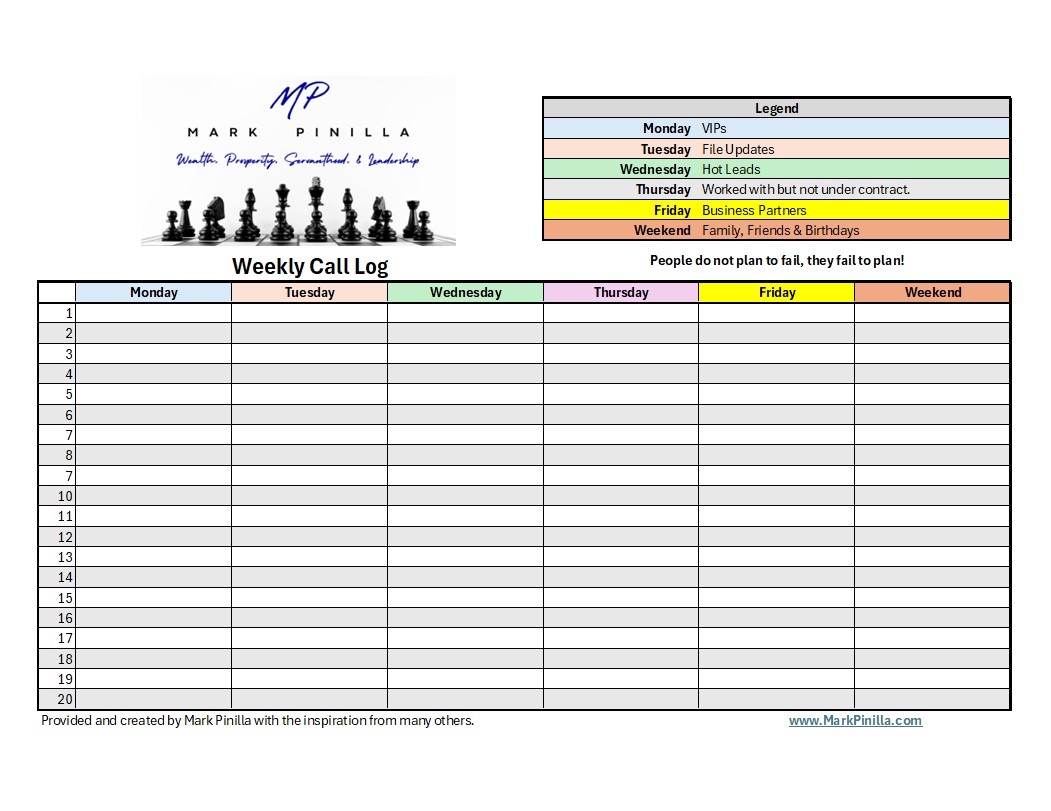
Success in business and life doesn’t happen by chance—it happens by planning. As Rick Guerrero, a NAHREP 10 Certified Trainer, emphasizes, preparation is everything. He starts each week by creating a call log every Sunday, setting the foundation for intentional and productive interactions. His approach mirrors NAHREP Discipline #2: Be in the top 10% of your profession by taking your craft seriously and working toward mastery. Learn more about the NAHREP 10 Disciplines here.
Sara Mendez Rodriguez, CEO of Titan Title & Chairperson for the Hispanic Wealth Project, suggests a themed call log to ensure balance and variety. For example:
- Monday: VIPs
- Wednesday: Focus on hot leads.
- Friday: Reach out to business partners.
- Weekend: Dedicate time to friends, family, and birthday celebrations.
Why Following Up Matters
According to statistics, 70% of buyers and sellers choose a real estate agent based on referrals from friends and family. This underscores the importance of maintaining personal and professional connections. Planning calls with intention, as suggested by Rick and Sara, ensures you never miss an opportunity to nurture these relationships.
Real Estate Insights for Relationships
To add his personal touch to the call log, Mark Pinilla, a NAHREP 10 Certified Trainer, added the weekend column. Birthdays and family milestones aren’t just personal—they can be professional goldmines. Studies show that buyers and sellers often prefer working with someone they know and trust. By incorporating these touchpoints into your weekend calls, you position yourself as their go-to expert when the time comes.
Action Plan with Mark Pinilla
For those looking to maximize their wealth-building strategy, contact Mark Pinilla, a trusted resource for investment properties and real estate expertise. Waiting is not in your best interest—contact Mark here.