Understanding the Florida Lease Agreement and effectively protecting the landlord, tenant, and Realtor’s interests. Learn what even some of the most experienced veteran real estate agents do not know and where most of the mistakes are made. Learn how to fill in the maintenance section, deal with active-duty military, and more.
This class and visual presentation lecture covers the Florida Lease Agreement intertwined with realtor & property management experiences based on how the lease was written/filled in. The training will cover the lease agreement flow from acquiring a tenant to the closing/move-in and the responsibilities of the Realtors® to their customers.
The Lease Agreement process will include:
• How to write a lease that protects the landlord, the tenant, and the Realtor®.
• Understand the difference between practicing law and being a Realtor®.
• Understanding the importance of naming the parties involved in the lease.
• Deposits and how to properly handle them.
• Understand the maintenance section and how it affects owners and tenants.
• How to handle active-duty military and their special exceptions to the leasing process.
• How to make sure the landlord does not pay for storage.
• Best practices for making sure all the sections are signed and initialed.
• Best practices when dealing with foreign landlords.
BONUS CONTENT:
• Service and Support Animals
• Understand the only questions you can ask a person requesting a reasonable accommodation.
• Understand the kind of documents that can be requested.
• Understand who can provide reasonable or trustworthy documentation as proof of the tenant’s need for a reasonable accommodation.
• Understand why a service or support animal is not a pet.
How Mark Pinilla Can Help
Mark Pinilla is a top-producing property manager with Keyes Property Management and trainer with nearly 30 years of real estate and property management experience. He supports over 1,000 REALTORS® at The Keyes Company, providing expert guidance on lease agreements, landlord-tenant laws, and compliance best practices.
Understanding the Florida Lease Agreement and effectively protecting the landlord, tenant, and Realtor’s interests. Learn what even some of the most experienced veteran real estate agents do not know and where most of the mistakes are made. Learn how to fill in the maintenance section, deal with active-duty military, and more.
This class and visual presentation lecture covers the Florida Lease Agreement intertwined with realtor & property management experiences based on how the lease was written/filled in. The training will cover the lease agreement flow from acquiring a tenant to the closing/move-in and the responsibilities of the Realtors® to their customers.
The Lease Agreement process will include:
• How to write a lease that protects the landlord, the tenant, and the Realtor®.
• Understand the difference between practicing law and being a Realtor®.
• Understanding the importance of naming the parties involved in the lease.
• Deposits and how to properly handle them.
• Understand the maintenance section and how it affects owners and tenants.
• How to handle active-duty military and their special exceptions to the leasing process.
• How to make sure the landlord does not pay for storage.
• Best practices for making sure all the sections are signed and initialed.
• Best practices when dealing with foreign landlords.
BONUS CONTENT:
• Service and Support Animals
• Understand the only questions you can ask a person requesting a reasonable accommodation.
• Understand the kind of documents that can be requested.
• Understand who can provide reasonable or trustworthy documentation as proof of the tenant’s need for a reasonable accommodation.
• Understand why a service or support animal is not a pet.
How Mark Pinilla Can Help
Mark Pinilla is a top-producing property manager with Keyes Property Management and trainer with nearly 30 years of real estate and property management experience. He supports over 1,000 REALTORS® at The Keyes Company, providing expert guidance on lease agreements, landlord-tenant laws, and compliance best practices.
Why the smartest people don’t know everything—they know everyone.
There’s a myth we’ve been sold for far too long: that the smartest person in the room is the one who knows the most.
That’s false.
The smartest person in the room isn’t the encyclopedia. It’s the one who knows where to go, who to call, and how to connect people to what they need.
In today’s world, success doesn’t belong to know-it-alls. It belongs to connectors—the people who intentionally build bridges, learn from others, and lift everyone around them.
Intelligence Is No Longer What You Think It Is
You don’t need to know everything. It’s not possible. The person who thrives in this economy is the one who knows where to find answers—and who they can trust to deliver them.
This kind of intelligence is social, emotional, and deeply human.
That means showing up. Listening closely. Remembering names. Asking questions that matter. Caring about people’s dreams—even when there’s nothing in it for you.
That’s what builds authentic capital—not the transactional kind, but the kind that opens doors when you least expect it.
Be the Connector, Not the Competitor
Most people try to compete. Few people try to connect.
But here’s the truth: matchmakers win—in business and in life. Because when you become the person who helps others succeed, they remember. They refer. They return.
In the classic book The Go-Giver, Bob Burg writes:
“Your true worth is determined by how much more you give in value than you take in payment.”
When you help two people meet who were meant to meet, you’ve just created value without even sending an invoice.
Your Comfort Zone Is Not Your Calling
Connection requires one thing most people avoid: getting uncomfortable.
You’ll have to reach out. Go to events alone. Start conversations that aren’t easy. Ask questions you don’t have the answer to.
You’ll have to become a student again—curious, humble, and open.
But this discomfort is where the magic is.
Put your hand on the pulse of what’s happening around you. Pay attention to who’s building, who’s stuck, who’s hiring, who’s launching, who’s hurting. And then ask: Who do I know that could help?
That’s the beginning of legacy work.
How to Build Intentional Relationships That Create Success
Here’s how to start becoming a connector today:
Attend one new event this month. Even if it feels awkward.
Ask better questions. Not “What do you do?” but “What’s exciting you lately?”
Follow up meaningfully. A voice memo, a resource, a connection.
Keep notes on people. Track what they care about.
Look for “matches” everywhere. Every conversation is a potential connection.
Give first. Always. Value leads. Ego follows.
The Mark of True Success
In a world of automation and AI, what can’t be replaced is human connection. No algorithm can match your intuition. No app can replicate the sincerity of a warm introduction.
If you want to be indispensable in your career, business, or community—become the person who makes others successful.
Your network isn’t about who knows you. It’s about who trusts you enough to say, “You need to talk to them.”
That’s how legacies are built. That’s how doors open. And that’s the mark of true success.
Ready to Build Deeper Connections That Lead to Real Success?
You don’t have to do it alone.
Whether you’re a rising leader, entrepreneur, or someone ready to live more intentionally—your next level will come through people, not just plans.
As a speaker, NAHREP 10 Certified Trainer, and mentor, I help individuals like you expand your influence by building the right relationships—with clarity, strategy, and purpose.
If you’re ready to become a connector, a giver, and a leader who elevates others while building your legacy— Let’s connect.
We’ve been told that wealth is about money. What we drive, wear, or swipe.
But what if I told you that you’re already rich?
Not because of your bank account, but because of something far more powerful.
In a culture that glorifies the visible and overlooks the invaluable, we’ve lost sight of what it means to truly be wealthy. And worse, we’ve ignored what to do with that wealth once we realize we have it.
Real Wealth Wears No Price Tag
There are many kinds of riches. Here are just a few:
Rich in family: the love of people who care for you, no matter what
Rich in friendships: loyal souls who stand with you in silence and in storms
Rich in health: the quiet power of waking up with breath, energy, and motion
Rich in work: the dignity and stability of a job, a career, or a calling
Rich in mental strength: scars that became wisdom, pain that built perseverance
Rich in freedom: the ability to choose where you go, who you become, and how you live
Rich in faith: a belief that carries you when life doesn’t make sense
If you recognize even one of these in your life, you are rich. You might not feel it every day, but it’s there. The question is not if you are blessed. The question is, what will you do with your blessings?
The Moment I Realized I Was Wealthy
Over two decades ago, but I still remember it like yesterday, my wife and I made a decision together. I accepted a job that came with long hours, weekend work, and missed holidays.
At first, it felt worth it. But over time, something started to crack. I felt like a stranger in my own home. I was exhausted, irritable, and stretched thin.
One day, in a moment of quiet frustration, my wife, Marcela, gently reminded me, “We decided this together.”
She wasn’t upset. She didn’t blame me. Instead, she affirmed something deeper. We were in this together, and we’d figure it out together.
It hit me like a wave of relief. I realized that no matter how overwhelmed I felt, I had something money could never buy. I had a partner. A true teammate in life. Someone who didn’t point fingers when things got hard, but extended a hand to solve it with me.
That’s wealth.
People ask me what the secret is to a strong 28-year marriage. My answer is simple. We make decisions together. And when you do that, no one has permission to blame the other if the outcome isn’t perfect. You work the problem, not each other.
That moment taught me that I am rich in love, in loyalty, and in shared purpose.
Gratitude Is Not the End
Here’s the trap. Feeling grateful and stopping there.
Gratitude is powerful, but if it doesn’t lead to action, it becomes self-indulgent. Comfort can turn into complacency. Blessings, if not handled well, can turn into blind spots.
We start to believe we’ve earned everything, forgetting the people, the grace, the divine timing that helped us.
So let me say this clearly.
Blessings come with responsibility.
We’re not meant to hoard what we’ve been given. We’re meant to steward it, for others.
“Every one of us needs to show how much we care for each other and, in the process, care for ourselves.”
-Diana, Princess of Wales
What Paying It Forward Actually Looks Like
It’s easy to think that “paying it forward” means donating money or starting a foundation. And while those are great, they’re not the only way.
Real generosity shows up in small, powerful ways:
Listening to someone who feels unseen
Sharing your story so someone else knows they’re not alone
Helping someone get back on their feet with time, encouragement, or connections
Teaching your kids what true wealth looks like
Doing the good before you’re asked
Giving your presence, not just your possessions
You don’t need to be famous or financially flush to be generous. You just need awareness, gratitude, and intent.
From Rich to Responsible
Now that you know you’re rich, what next?
Look around your life. Name your blessings. Then turn those blessings into bridges for someone else.
You’ve been given much. More than you may realize. And someone else is praying for the very thing you’re holding right now.
You’ve been equipped not just for comfort, but for contribution.
You don’t have to be rich in money to change lives. You just have to be rich in love, in wisdom, in story, and willing to share it.
So today, pause. Reflect. And ask yourself:
What am I rich in? And how can I pay it forward?
Because at the end of the day, blessings come with responsibility.
“Make every effort to add to your faith goodness; and to goodness, knowledge… For if you possess these qualities in increasing measure, they will keep you from being ineffective and unproductive.” —2 Peter 1:5–8
What You Can Do Right Now
If this message resonated with you, don’t let it stop at reflection.
Take action today:
Identify one area in your life where you’re already rich
Find one person to bless intentionally this week with that richness
Share this post with someone who needs a reminder that they already have something valuable to give
Strategies to Break Free from Debt and Keep Your Hard-Earned Money
Debt can feel overwhelming, especially when interest payments begin to compound, trapping you in an endless cycle. According to recent data from Experian, the average American has over $105,000 in total consumer debt, including mortgage, auto, student, and credit card balances, while the average credit card balance stands around $6,730. Even more alarming, the Federal Reserve reports Americans paid over $120 billion in credit card interest alone last year. Fortunately, proven strategies exist to help you reclaim your financial freedom.
Proven Debt Repayment Strategies
1. Debt Avalanche Method
This strategy prioritizes tackling balances with the highest interest rates first. By targeting these debts, you minimize interest payments and reduce the total repayment amount. The debt avalanche saves you the most money in the long run.
2. Debt Snowball Method
Made popular by financial expert Dave Ramsey, this approach involves paying off the smallest balances first, regardless of the interest rate. Each small victory boosts your motivation and momentum, creating psychological wins that encourage continued financial discipline.
3. Debt Consolidation and Refinancing
Refinancing consolidates multiple liabilities into a single, manageable loan, often at a lower interest rate. It simplifies repayments, potentially reduces monthly payments, and significantly cuts interest expenses.
How Much Interest Is Eating Your Wealth?
High-interest debt is particularly costly. For instance, carrying a $10,000 balance at 20% interest and paying only the minimum monthly payment (typically 2%) could cost you nearly $12,000 in interest and take over 30 years to repay. That’s more than the original amount owed!
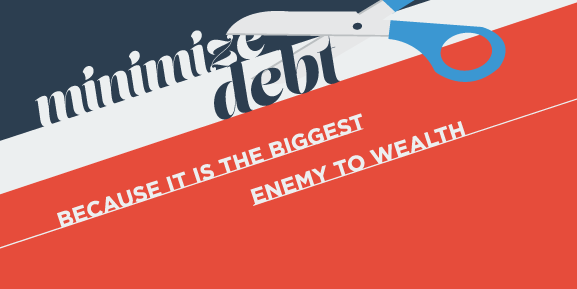
NAHREP Discipline #4: Minimize Debt
The National Association of Hispanic Real Estate Professionals (NAHREP) emphasizes minimizing debt as one of its 10 key disciplines. Discipline #4 encourages you to eliminate debt that doesn’t help build wealth or generate income. Adhering to this discipline puts you on a path toward financial independence and long-term wealth creation.
Steps to Take Today:
Assess what you owe: Understand exactly what balances exist, interest rates, and repayment terms.
Choose your strategy: Avalanche, snowball, or consolidation—pick what aligns best with your financial goals and personality.
Create a realistic budget: Identify unnecessary expenses and allocate savings toward debt repayment.
Navigating repayment can be challenging. Mark Pinilla, experienced real estate and personal finance, provides personalized guidance to help individuals and families become debt-free faster. Leveraging extensive financial expertise and disciplined strategies, Mark helps you regain control of your finances.
To start your journey toward financial freedom, reach out to Mark Pinilla today and make your repayment reduction a clear and achievable goal.
Stop calling it “realistic” when it’s really just fear in disguise.
You weren’t born to hit small goals and call it wisdom. You weren’t built for just “a little success.” You know it. I know it. That restless energy inside you? That’s potential—untapped, unfinished.
Let’s get honest for a moment: You can shoot for the stars and miss… or you can shoot for the sh*t and hit it.
Too many people are doing the second one. Aiming low. Hitting the mark. And walking away like that was ever the point.
It wasn’t.
You didn’t start climbing just to stop at the first hill. That hill isn’t your legacy. It’s your warm-up.
And yet… it’s where most people quit. Why? Because comfort feels like success when you’re tired. Because being “good enough” is the quietest form of quitting.
But here’s the truth:
You were made for mastery.
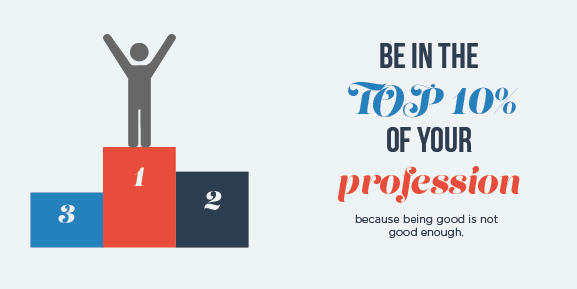
That’s what NAHREP Discipline #2 is all about: Be in the top 10% of your profession. Because being good isn’t good enough. Not for someone like you.
Being in the top 10% means choosing the harder road. The one with longer nights. More rejection. More self-doubt. And more growth than you thought you could survive.
You don’t get that by playing small. You get it by raising your target. By staying in the room when others leave. By sharpening your edge even when no one’s watching.
You’re not tired. You’re uninspired. You’re not weak. You’re out of alignment.
And the solution? Raise your bar. Not tomorrow. Not next quarter. Now!
Read the book. Make the call. Reinvest in yourself. Ask your clients for feedback. Track your performance. Cut the distractions. Burn the excuses.
You didn’t come this far to be okay. You’re here to be excellent. To become the version of yourself your future demands.
It was an honor to share my journey—not just in real estate, but in service to our veterans through Vet Info. Your podcast creates a powerful space where stories are shared, struggles are acknowledged, and a true sense of community is built. Being part of a conversation that supports service members, veterans, and their families is something I take great pride in.
Francisco, thank you for your service, your voice, and your platform. I’m grateful to stand alongside you in the mission to inform, inspire, and advocate for those who have given so much.
Looking forward to continuing the work and growing this community together.
Understanding the Florida Lease Agreement and effectively protecting the landlord, tenant, and Realtor’s interests. Learn what even some of the most experienced veteran real estate agents do not know and where most of the mistakes are made. Learn how to fill in the maintenance section, deal with active-duty military, and more.
This class and visual presentation lecture covers the Florida Lease Agreement intertwined with realtor & property management experiences based on how the lease was written/filled in. The training will cover the lease agreement flow from acquiring a tenant to the closing/move-in and the responsibilities of the Realtors® to their customers.
The Lease Agreement process will include:
• How to write a lease that protects the landlord, the tenant, and the Realtor®.
• Understand the difference between practicing law and being a Realtor®.
• Understanding the importance of naming the parties involved in the lease.
• Deposits and how to properly handle them.
• Understand the maintenance section and how it affects owners and tenants.
• How to handle active-duty military and their special exceptions to the leasing process.
• How to make sure the landlord does not pay for storage.
• Best practices for making sure all the sections are signed and initialed.
• Best practices when dealing with foreign landlords.
BONUS CONTENT:
• Service and Support Animals
• Understand the only questions you can ask a person requesting a reasonable accommodation.
• Understand the kind of documents that can be requested.
• Understand who can provide reasonable or trustworthy documentation as proof of the tenant’s need for a reasonable accommodation.
• Understand why a service or support animal is not a pet.
How Mark Pinilla Can Help
Mark Pinilla is a top-producing property manager with Keyes Property Management and trainer with nearly 30 years of real estate and property management experience. He supports over 1,000 REALTORS® at The Keyes Company, providing expert guidance on lease agreements, landlord-tenant laws, and compliance best practices.