It was a typical Saturday afternoon on the Florida Turnpike. I was headed to an event, catching up with my mother on the phone, checking in on her and my father.
As I drove, I noticed two motorcyclists behind me in the rearview mirror. They were signaling to one another and weaving slightly. In a matter of seconds, they passed me on the ramp onto the 836 eastbound.
Not 20 seconds later, everything changed.
One of the riders was now off his bike, standing and struggling to remove his helmet. His motorcycle was mangled and wedged into the guard rail. A car had stopped behind him to help.
My eyes immediately searched for the second rider. I scanned to the left and saw the second motorcycle — smashed and alone. Then, further left, I saw what I thought might be a body. It looked as if it had been wrapped around the guard rail. My heart dropped.
I hung up on my mother and paused. My mind raced: Call 911. Avoid traffic. Park the car. Go help. Stay safe.
All of this happened in seconds. I knew what to do, but it was like my brain was moving faster than my body.
I called 911.
Thankfully, I have a strong sense of direction. I was able to clearly explain where I was and how emergency services could best access the scene.
The rider near the rail was not moving. The situation was far too graphic to describe in detail. As I waited, a bystander in a Mazda began filming the victim with their phone. I felt indignant. I could not understand how recording such a moment added value to anyone, least of all to the man lying there.
The second rider, the one who had been standing, approached. I gently stopped him.
“Don’t go over there,” I said. “You don’t want that image in your mind.”
I asked for his name.
“Moises N.,” he replied, visibly shaken.
I relayed that to the 911 operator and asked what happened. Moises said his friend had hit something in the road and lost control. Moises could not stop fast enough. He collided with his friend and slid down the ramp after being thrown from his own bike.
When first responders arrived, I flagged them down and gave a brief report. Because I had not witnessed the exact moment of the crash, I was released.
A Day Later: Still Processing
A day later, I cannot stop thinking about Moises. About the unknown rider. About their families. I have prayed for them. I have replayed the moment in my head.
And I keep asking myself, could I have done more?
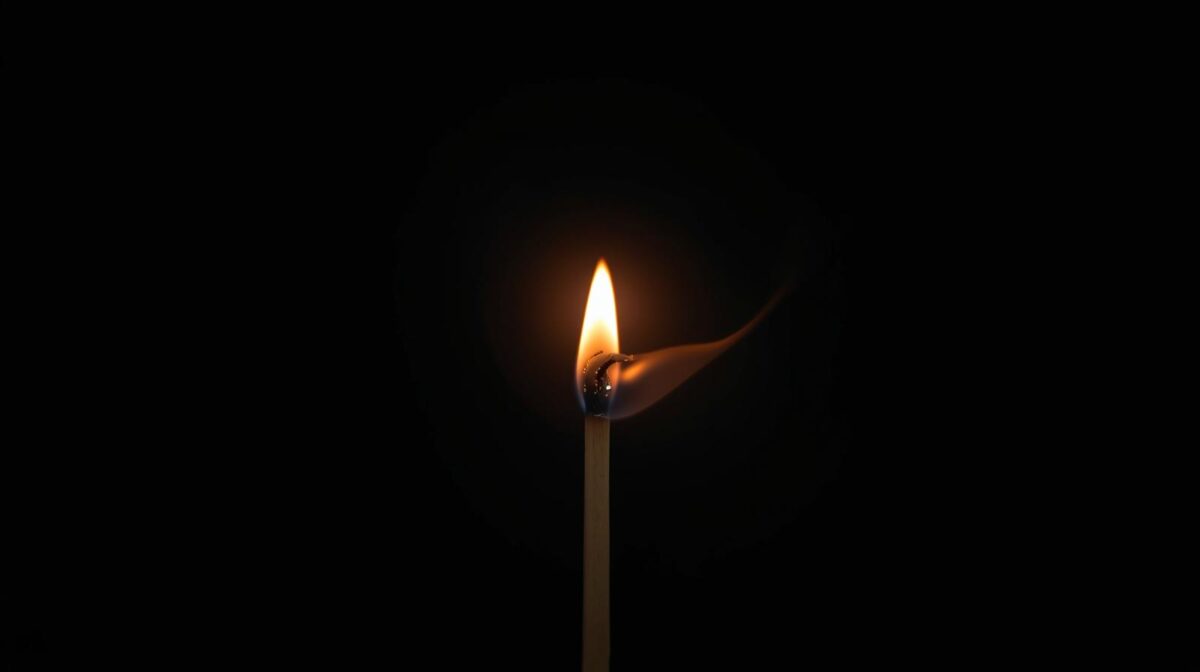
But in the time it takes to light a match and watch it burn out, a life was lost.
That is how fast it happened. That is how fragile life is.
No second chances.
Moises was left with a second chance. What he does with it is between him and God.
But me? I realize I have one too.
Every day I wake up, I am reminded that I am still here. And that means I still have a chance to live fully, love deeply, and serve intentionally.
Live a Life That Leaves a Legacy
There is a quote I have carried with me for years. It has shaped the way I live and lead:
“Be ashamed to die until you have won some victory for humanity.”
— Horace Mann
I serve my community because I feel like I have a debt to pay.
I have been so blessed. I lack nothing. I want for nothing. And yet I feel like I have not done enough. That if I complain or stop giving, I could lose everything that truly matters.
I never want to lose my humanity. I never want to think, “I have done enough.”
That is why this scripture hits me deeply:
2 Peter 1:5–8 (NIV)
“Make every effort to add to your faith goodness; and to goodness, knowledge; to knowledge, self-control; to self-control, perseverance; to perseverance, godliness; to godliness, mutual affection; and to mutual affection, love. For if you possess these qualities in increasing measure, they will keep you from being ineffective and unproductive in your knowledge of our Lord Jesus Christ.”
What stands out most to me is this: “In increasing measure.”
That means you never stop. You keep adding. You keep growing. You stay in motion.
NAHREP Discipline #9: Be Generous With People Who Are Less Fortunate
I will keep serving. Not when it is convenient. Not when I feel like it. But because it is how I choose to live.
This is NAHREP Discipline #9:
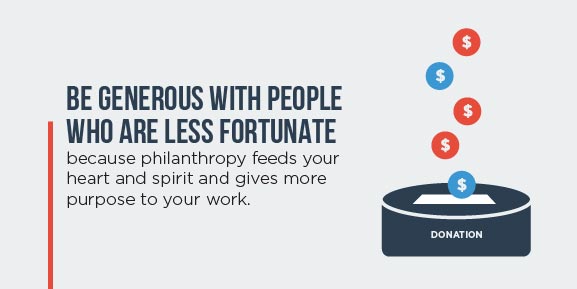
“Be generous with people who are less fortunate because philanthropy feeds your heart and spirit and gives more purpose to your work.”
My legacy is not a destination. My legacy is how I live my life.
“My legacy will be that I served others so they could live a better quality of life and become better versions of themselves — financially, educationally, spiritually, and in their family lives. I hope to inspire them to serve in the same way.”
— Mark Pinilla
🙏 Rest in Peace, unknown motorcyclist.
Your life reminded me that mine still has meaning.
Your tragedy became my moment of clarity.